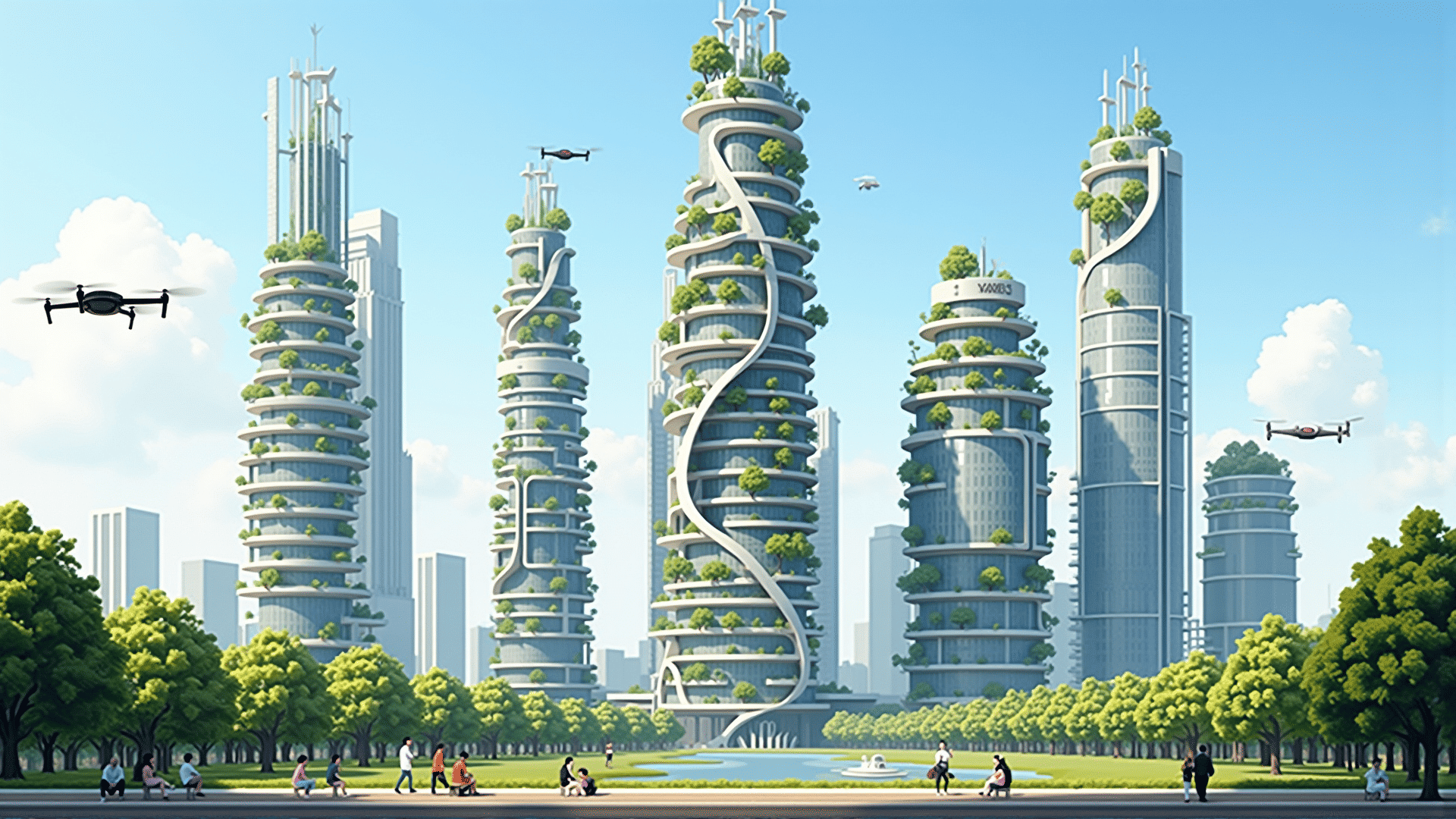
In the rapidly evolving landscape of urban development, skyscrapers stand as towering symbols of human ambition and architectural prowess. As cities grow denser and more populous, these vertical marvels are not just a necessity but also an opportunity to redefine the urban habitat. The future of skyscrapers is poised to integrate eco-friendly designs and technological advancements that promise to revolutionize urban living.
Eco-Friendly Designs and Sustainability
One of the most significant trends in the future of skyscrapers is the shift towards sustainability and eco-friendly designs. With climate change and environmental concerns at the forefront of global issues, architects and engineers are reimagining skyscrapers as green sanctuaries in the sky. Innovations in materials, energy efficiency, and design are making skyscrapers more sustainable than ever before.
New construction materials, such as carbon-positive concrete and smart glass, are being developed to reduce the carbon footprint of these massive structures. Furthermore, the incorporation of vertical gardens and natural ventilation systems enhances air quality and reduces energy consumption. Some skyscrapers are even being designed with built-in renewable energy sources, such as wind turbines and solar panels, to generate power for their inhabitants.
Moreover, the concept of zero-energy buildings is gaining traction. These buildings produce as much energy as they consume, thanks to cutting-edge technology and design strategies. As sustainability continues to be a priority, the future skyline will likely feature buildings that stand as pinnacles of environmental stewardship.
Technological Advancements
The technological landscape is drastically influencing how skyscrapers are designed, constructed, and utilized. Smart technologies are integrating building management systems that automate climate control, security, and energy usage, ensuring that skyscrapers are more efficient and responsive to their occupants' needs.
One notable advancement is the evolution of high-speed elevators. New magnetic and vacuum-based systems, such as the MULTI system, allow elevators to move not only vertically but also horizontally, enhancing the efficiency and space usage within buildings. Such innovation not only improves transport efficiency but also opens new possibilities for architectural design without the constraints of traditional elevator shafts.
Additionally, the integration of augmented reality (AR) and virtual reality (VR) into building design provides architects and engineers with new tools to plan and visualize skyscrapers more effectively. These technologies enable stakeholders to experience the building before it's constructed, leading to more informed design decisions and minimizing costly changes during construction.
Impact on Urban Communities
The future of skyscrapers also holds transformative potential for urban communities. As these towering structures redefine city skylines, they also reshape how communities interact. Mixed-use skyscrapers that combine residential, commercial, and recreational spaces create vibrant, self-sustaining ecosystems. This holistic approach encourages social interaction and builds a sense of community within towering city heights.
Furthermore, the concept of "skybridges" is gaining popularity. These are horizontal structures connecting multiple skyscrapers, offering additional amenities and green spaces. Skybridges enable the creation of interconnected urban areas that enhance accessibility and foster a closer-knit urban lifestyle.
Challenges and Opportunities
While the future of skyscrapers is bright, it is not without challenges. Urban planners and architects must navigate regulations, cost constraints, and public perception. Balancing the iconic with the functional, and the innovative with the practical, is a delicate act that requires visionary thinking and collaborative effort.
However, the opportunities are vast. As urbanization continues to accelerate globally, the demand for efficient, sustainable, and technologically advanced skyscrapers will only grow. These structures will not merely house people; they will elevate the quality of urban life, fostering communities that thrive in the skies.
In conclusion, the future of skyscrapers is not just about reaching new heights but also about redefining how we live, work, and interact within our cities. By embracing eco-friendly designs and cutting-edge technologies, skyscrapers are poised to lead the charge in creating more sustainable, connected, and vibrant urban futures.